
Precision CNC Machined Components for Industrial Applications
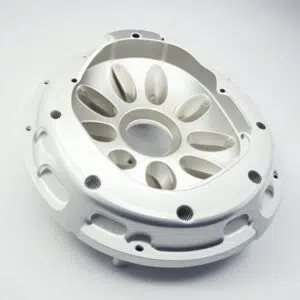
# Precision CNC Machined Components for Industrial Applications
## The Importance of CNC Machining in Modern Industry
CNC machining has revolutionized the manufacturing sector by providing unparalleled precision and repeatability in producing complex parts. This advanced manufacturing technique has become indispensable across various industries, from aerospace to medical devices, where tight tolerances and high-quality finishes are critical.
## Understanding CNC Machined Parts
CNC (Computer Numerical Control) machined parts are components manufactured using automated machine tools controlled by pre-programmed computer software. These parts offer several advantages over traditionally manufactured components:
– Exceptional dimensional accuracy
– Consistent quality across production runs
– Ability to create complex geometries
– High repeatability and scalability
– Superior surface finishes
## Key Industries Utilizing CNC Machined Components
### Aerospace and Defense
The aerospace industry demands components with extreme precision and reliability. CNC machining produces critical aircraft parts like turbine blades, engine components, and structural elements that must withstand harsh conditions while maintaining perfect functionality.
### Automotive Manufacturing
Modern vehicles incorporate thousands of CNC machined parts, from engine blocks to transmission components. The automotive sector benefits from CNC machining’s ability to produce high-volume parts with consistent quality while meeting strict safety standards.
Keyword: CNC machining parts
### Medical Device Production
Medical applications require biocompatible materials and microscopic precision. CNC machining creates surgical instruments, implants, and diagnostic equipment with the necessary accuracy and surface finishes for medical use.
### Electronics and Telecommunications
The electronics industry relies on CNC machining for producing enclosures, heat sinks, connectors, and other components that require precise dimensions and excellent thermal properties.
## Materials Used in CNC Machining
CNC machines can work with a wide range of materials, including:
– Metals: Aluminum, steel, titanium, brass, and copper alloys
– Plastics: ABS, PEEK, Delrin, and polycarbonate
– Composites: Carbon fiber and fiberglass reinforced materials
– Exotic alloys: Inconel, Hastelloy, and other specialty metals
## Advantages of CNC Machined Components
### Precision and Accuracy
CNC machines can achieve tolerances as tight as ±0.0001 inches, making them ideal for applications where precision is paramount.
### Cost-Effectiveness
While initial setup costs may be higher, CNC machining becomes highly cost-effective for medium to large production runs due to reduced labor costs and minimal material waste.
### Flexibility
CNC programming allows for quick changes between different parts, making it ideal for prototyping and small batch production without requiring extensive retooling.
### Durability
CNC machined parts typically exhibit superior strength and durability compared to cast or molded components, especially when made from high-grade materials.
## Quality Control in CNC Machining
Reputable manufacturers implement rigorous quality control measures, including:
– First article inspection (FAI)
– In-process dimensional verification
– Surface finish analysis
– Material certification
– Final inspection and testing
## Choosing the Right CNC Machining Partner
When selecting a supplier for CNC machined components, consider:
– Industry experience and certifications
– Equipment capabilities and technology
– Quality control processes
– Material expertise
– Lead times and production capacity
– Customer service and technical support
## Future Trends in CNC Machining
The CNC machining industry continues to evolve with advancements such as:
– Increased automation and robotics integration
– Advanced multi-axis machining capabilities
– Improved cutting tool technologies
– Enhanced software for simulation and optimization
– Sustainable manufacturing practices
As industries demand higher precision and more complex components, CNC machining remains at the forefront of manufacturing technology, delivering reliable solutions for critical applications across all sectors.